IRGC Locks Down Ahmadinejad After Botched Israeli Regime-Change Operation
Iran’s Islamic Revolutionary Guard Corps has thrown former President Mahmoud Ahmadinejad under house arrest following the spectacular failure of an Israeli intelligence operation designed to install him as the country’s new leader—a stunning revelation that exposes the depth of Jerusalem’s efforts to topple Tehran’s theocratic regime.
The 69-year-old firebrand disappeared from public view for months after Israeli jets targeted his compound during the massive Operation Epic Fury strikes on February 28. The IRGC’s intelligence wing now holds him captive after discovering he’d been hiding in a Mossad-run safe house, according to four Iranian officials.
This wasn’t just another Middle Eastern intrigue. This was a calculated Israeli bet on regime change.
The Vanishing Act
Ahmadinejad’s compound took a direct hit in the early morning hours of February 28, the same day that killed Supreme Leader Ayatollah Ali Khamenei. Israeli intelligence immediately spirited the former president away to a secure location under Mossad control.
For weeks, nobody saw him. No public statements. No appearances. Nothing.
The silence was deafening—and deliberate.
Israel’s High-Stakes Gamble
The Israelis weren’t just protecting a former enemy. They were cultivating a potential replacement for Iran’s clerical establishment. Think about the audacity: Israel, Tehran’s sworn enemy, harboring Iran’s former president while planning to install him as the new leader.
This operation reveals Jerusalem’s willingness to work with anyone—even Holocaust-denying, Israel-hating Ahmadinejad—if it means dismantling Iran’s nuclear ambitions and ending four decades of “Death to America” chants.
The Comeback That Wasn’t
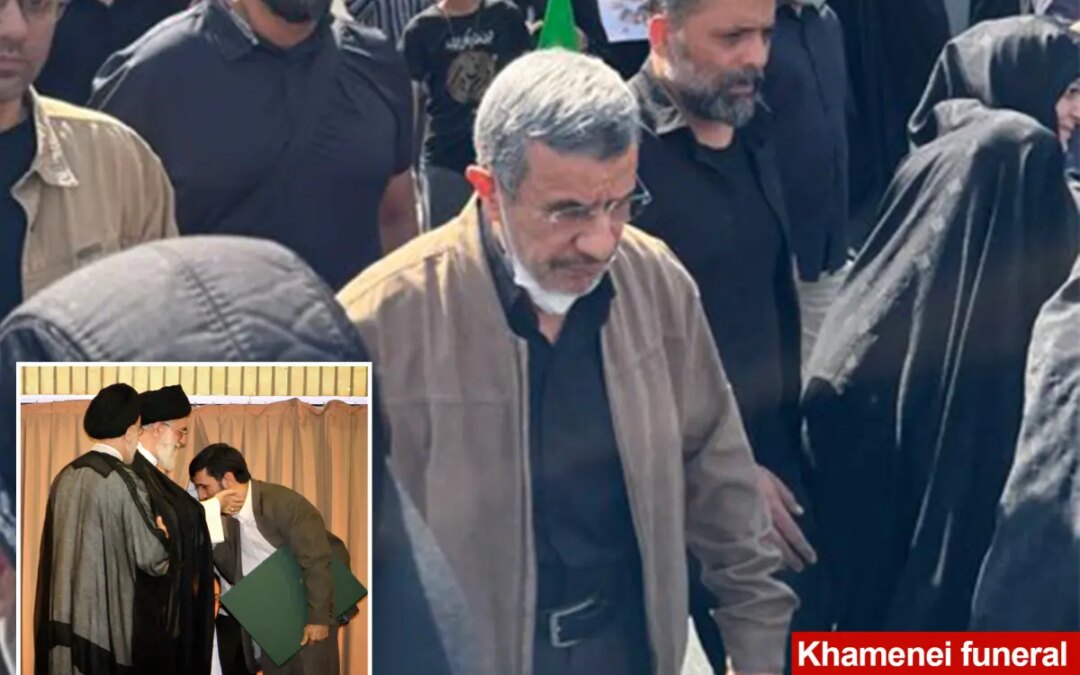
Ahmadinejad finally resurfaced last week at Khamenei’s funeral, flanked by what appeared to be security guards. Iranian officials knew immediately something had gone wrong with their former president. The IRGC moved fast, placing him under house arrest before he could become the figurehead for a Western-backed transition.
The former president ruled Iran from 2005 to 2013 with characteristic brutality, crushing the Green Movement protests and accelerating the nuclear program. His reappearance raised immediate questions about his months-long absence and his relationship with Israeli intelligence.
The Bigger Picture
This episode demonstrates three critical realities about Middle Eastern power politics.
First, Israel’s intelligence capabilities remain unmatched. The Mossad successfully extracted and protected Iran’s former president for months while planning a government-in-exile scenario.
Second, the Islamic Republic’s paranoia isn’t entirely unfounded. Their security services correctly identified a genuine threat to regime stability involving one of their own former leaders.
Third, the regional power struggle has entered unprecedented territory. When Israel considers installing a former Iranian president who denied the Holocaust and called for Israel’s destruction, the situation has moved beyond traditional geopolitical calculations.
What Happens Now
Ahmadinejad’s house arrest solves one problem for Tehran’s mullahs while creating another. They’ve neutralized a potential Western puppet, but they’ve also confirmed that Israel penetrated their security at the highest levels.
The IRGC will undoubtedly conduct extensive interrogations to determine exactly what Ahmadinejad discussed with Israeli handlers and what commitments were made. Every Iranian official who had contact with the former president now falls under suspicion.
For Israel, the operation’s failure represents a significant setback in efforts to foster regime change in Tehran. The investment in protecting and preparing Ahmadinejad yielded nothing but exposure of intelligence assets and methods.
The Unanswered Questions
How did Israel convince Ahmadinejad to cooperate? What promises were made? Did he genuinely believe he could return to power with Western backing, or was he simply trying to survive?
The answers remain locked away with Ahmadinejad in his IRGC-controlled detention. But this much is certain: the revelation of this operation demonstrates that both Israel and Iran are willing to pursue extraordinarily risky strategies to achieve their strategic objectives.
Iran’s theocracy survives for now, but this episode confirms the regime’s fundamental weakness. When your own former president becomes a foreign intelligence asset, your legitimacy problems extend far beyond Western pressure campaigns.
The Islamic Republic dodged a bullet. Whether they can maintain their grip on power remains the defining question of Middle Eastern stability.