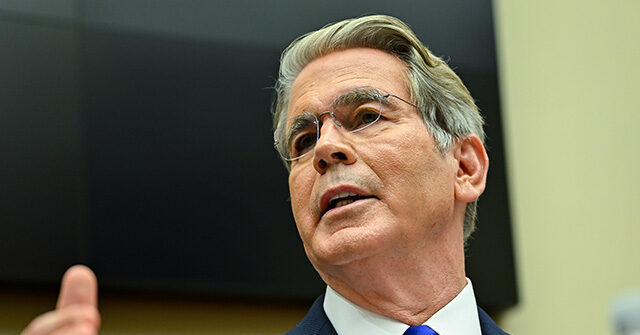
Becerra’s Catastrophic Failure: 130,000 Missing Migrant Children Haunts California Governor’s Race
At least 130,000 migrant children vanished under Xavier Becerra’s watch as U.S. Health Secretary—left vulnerable to sex trafficking, forced labor, and abuse that should shock the conscience of every American. Now this staggering failure is detonating in the middle of California’s gubernatorial race, and voters deserve answers.
The numbers tell a damning story. During Becerra’s tenure from 2021 through early 2025, nearly 480,000 unaccompanied migrant children crossed into U.S. custody under the Office of Refugee Resettlement—the HHS division Becerra oversaw. Tens of thousands simply disappeared into America’s shadows.
Republican challenger Steve Hilton has seized on explosive new whistleblower allegations revealing children as young as six were trafficked for sex and labor after being released to inadequately vetted sponsors. The revelations are forcing California voters to confront an uncomfortable question: Can a man who failed to protect the most vulnerable children in federal custody be trusted to govern the nation’s most populous state?
“Assembly Line” of Neglect
Chris Clem doesn’t mince words. A 27-year Border Patrol veteran who served as senior adviser at HHS in 2025 after retiring as chief of the Yuma Sector in Arizona, Clem places responsibility squarely on Becerra’s shoulders.
“The single largest border crisis of our lifetime and the largest amount of kids—this does rise to the secretary’s level, and he should have had a finger on the pulse daily,” Clem told reporters, questioning whether Californians should trust Becerra after his disastrous HHS tenure.
“When he was in charge of kids before, he didn’t do a very good job of it.”
The criticism hits particularly hard given Becerra’s own callous description of his child processing system as resembling a Ford “assembly line”—prioritizing speed over safety in a reckless race to empty federal facilities without proper vetting of sponsors.
Midnight Disappearances and Separated Siblings
The whistleblower accounts paint a chilling picture of systematic failure. At the Pomona Fairplex emergency intake center in Southern California, caseworkers witnessed young children woken at 2 a.m. or 3 a.m., handed small bags of belongings, and taken away by unidentified individuals.
“We have no idea who was going to be transporting the children,” one whistleblower revealed, suspecting the predawn timing ensured “nobody would see the children leaving the facility.”
Siblings were separated. Vulnerable minors vanished after leaving federal custody. Some children were later confirmed trafficked for sex or forced into dangerous labor conditions—exploitation that occurred on American soil under the supposed protection of the federal government.
“It was about getting kids out of government custody as fast as possible, and that’s where the horrors occurred because there was very little vetting of sponsors,” Clem explained. “That’s when they become missing.”
The Numbers Don’t Lie—and They Keep Growing
Independent investigations revealed HHS could not reach more than 85,000 children over just two years, losing contact with fully one-third of migrant children in its care. But Clem insists the real number is far higher—at least 130,000 children unaccounted for.
By June of this year, Homeland Security Secretary Markwayne Mullin confirmed the Trump administration had identified at least 146,000 migrant children who went missing during the Biden years.
“Numbers are always funny because part of the problem was the lack of accountability at HHS at the time,” Clem noted—a diplomatic way of saying the agency under Becerra’s leadership wasn’t even tracking the crisis properly.
The scale of this failure is unprecedented. Nearly half a million vulnerable children passed through a system that Becerra admitted was designed for speed, not safety—with catastrophic results that are only now coming to light.
Becerra Can’t Claim Ignorance
Perhaps most damning is the fact that Becerra personally visited these facilities. He saw the conditions. He understood the processes. He cannot credibly claim he was unaware of the systematic failures occurring under his direct authority.
“[Becerra] did visit his facilities, so he can’t act like he didn’t know,” Clem stated flatly.
This wasn’t an abstract policy failure happening in some distant bureaucracy. This was the cabinet secretary responsible for child welfare presiding over what may be the largest child trafficking crisis in American history—and doing nothing to stop it.
The Blame Game Won’t Work
Predictably, Becerra’s campaign has attempted to deflect responsibility onto President Trump’s first term, claiming the Biden administration inherited a “disorganized, chaotic mess” and that Becerra “rebuilt the child protection systems Trump gutted.”
It’s a tired playbook that insults voters’ intelligence.
Becerra served as HHS Secretary for four full years. The Biden administration had complete control of federal policy for that entire period. Whatever conditions existed in January 2021, Becerra owned the system by 2022, 2023, 2024, and into 2025.
His spokesperson even claimed no children were actually “lost,” arguing that once children were placed with sponsors, HHS had no further responsibility. It’s a legalistic dodge that fails to address the fundamental moral failure: children disappeared into trafficking networks on Becerra’s watch because his agency prioritized processing speed over child safety.
A Defining Character Issue
Steve Hilton, who has Trump’s endorsement in the governor’s race, has made Becerra’s HHS record a central campaign issue—and for good reason. This isn’t about partisan politics or policy disagreements. This is about basic human decency and competence in protecting vulnerable children.
“This is going to be a defining issue for Becerra because it defines him,” Hilton said. “He keeps telling us that the reason California should elect him governor is because of his experience—let’s look at how he ran HHS.”
“He failed the most basic task of humanity and decency, which is protecting the vulnerable children that were in his care.”
Hilton rejects the excuse that HHS was simply overwhelmed by unprecedented numbers, pointing to deliberate policy choices Becerra made that prioritized speed over safety.
“This wasn’t incompetence. This wasn’t an agency that was overwhelmed and just couldn’t cope,” Hilton insisted. “These shocking abuses of children happened as a direct result of deliberate action taken by Becerra.”
More Revelations Coming
Hilton has indicated that additional whistleblower allegations are expected to emerge in coming days and weeks, suggesting the full scope of failures under Becerra’s leadership has yet to be revealed.
California voters deserve to see the complete record before making their decision.
The Bottom Line
Xavier Becerra’s supporters want to discuss his policy vision for California, his legislative experience, or his commitment to progressive values. But character matters in leadership, and competence matters in governance.
The facts are undeniable: At least 130,000 children—possibly as many as 146,000—disappeared under Becerra’s watch as HHS Secretary. These weren’t just numbers on a spreadsheet. They were vulnerable children who deserved protection and received abandonment instead.
Some were trafficked for sex. Others were forced into dangerous labor. Many remain missing to this day, their fates unknown.
Becerra personally visited the facilities. He knew about the “assembly line” processing. He made deliberate policy choices that prioritized speed over thorough sponsor vetting. And when the predictable consequences emerged, his agency failed to even track the missing children properly.
Now he wants Californians to entrust him with governing the nation’s most populous state—home to nearly 40 million people, including millions of children whose safety would ultimately fall under his responsibility as governor.
California voters face a straightforward question: Does a man who oversaw the disappearance of over 100,000 vulnerable children deserve promotion to the state’s highest office?
The answer should be equally straightforward.