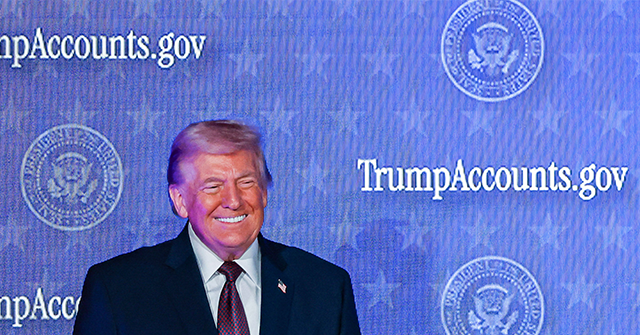
Bank of America just triggered a generational revolution—pledging to match the federal government’s $1,000 seed deposit for every eligible child of its 165,000 U.S. employees. That bold declaration cements what we already knew: Trump Accounts are redefining how American families build lasting wealth.
This isn’t welfare. It’s ownership. Every child born from January 1, 2025, through December 31, 2028, receives a guaranteed $1,000 deposit—no means tests, no income caps. Parents open accounts via IRS Form 4547 or online at TrumpAccounts.gov. Funds start flowing July 4, 2026.
Families can top up with up to $5,000 annually, inflation-adjusted after 2027. Employers may contribute an additional $2,500 per child, pretax, all invested in U.S. equity index funds. Withdrawals unlock at age 18—for college, home purchases, or business startups. Remaining balances roll into a traditional IRA.
Compound interest isn’t charity; it’s power. A child who receives the $1,000 federal deposit at birth and channels $2,500 a year into this program would amass roughly $85,000 by age 18 at a conservative 6% return. Left intact until retirement, that sum swells to more than $1.2 million.
Corporate America is racing to the front of this wealth-creation line. BlackRock kicked off the match frenzy in January. Charles Schwab, J.P. Morgan Chase, Intel, Robinhood, SoFi and Uber quickly followed. Now Bank of America joins the fray. The message is clear: in today’s talent war, benefits that forge generational equity trump free snacks and ping-pong tables.
This is more than perks—it’s strategic necessity. A bank that offers a $1,000 match gains an edge in recruiting and retaining top performers. The annual cost per child is a fraction of traditional salary increases, but the upside—employee loyalty and family security—is priceless.
Philanthropists are pouring fuel on the fire. Michael and Susan Dell committed $6.25 billion to seed 25 million middle-class children’s accounts with $250 each. Ray and Barbara Dalio are matching $250 for 300,000 Connecticut kids. State leaders are circling the opportunity. Texas has proposed adding $1,000 per account. Florida, Ohio and Georgia are weighing similar moves.
Imagine a Texas newborn whose parents work at Bank of America. That child wakes up with $3,000 on July 4, 2026—$1,000 from Washington, $1,000 from BofA, $1,000 from Texas. Add voluntary family and employer contributions, and that newborn stands poised to hit six figures before kindergarten.
Trump Accounts follow the Social Security playbook: universal and enduring. By sidestepping income restrictions, the program forges a coalition across the entire economic spectrum. No demographic is left behind—every parent becomes a stakeholder in America’s stock market success.
Expect political resilience. Programs that embrace universal eligibility survive partisan shifts. As every account holder tracks gains in the S&P 500, they’ll develop a vested interest in corporate profitability and sound economic policy. Ownership breeds responsibility.
Even critics on the left have joined the conversation. Renowned economist Teresa Ghilarducci teamed with Trump economic adviser Kevin Hassett to draft Section 530A. Their bipartisan collaboration underscores a simple truth: wealth-building matters more than redistribution.
The next six months will define this program’s destiny. If five more Fortune 500 firms announce matches this quarter, the dominoes fall. If Texas’s $1,000 state match spurs neighbors to follow suit, we hit critical mass. If enrollment remains seamless, participation will skyrocket among working-class families.
Bank of America’s decisive action signals that momentum is accelerating, not stalling. By embedding pretax payroll deductions, BofA has staked a claim on the long game. They’re not chasing headlines—they’re building futures.
The math is indisputable. Modest, consistent contributions into an equity-based structure deliver transformative outcomes. The question isn’t whether America’s children can achieve financial security—it’s whether corporate America and state governments will commit resources at the scale required.
Early evidence says they will. Trump Accounts are no longer a novel experiment. They’re poised to become the bedrock of intergenerational wealth for tens of millions of American families.