Half a Billion Taxpayer Dollars: How Fast-Food Giants Are Feasting on Food Stamp Money
Over half a billion dollars in taxpayer money has flowed directly into the cash registers of McDonald’s, Burger King, and other fast-food chains through a little-known federal food stamp loophole—and California alone is responsible for nearly $475 million of that staggering total.
The figures are damning. Between June 2023 and May 2025, fast-food corporations pocketed more than $524 million through the Supplemental Nutrition Assistance Program’s Restaurant Meals Program component. This represents a spectacular departure from SNAP’s original mission: providing nutritious food for low-income families to prepare at home.
The California Gold Rush—For Corporate Chains
California dominates this taxpayer-funded bonanza with an iron grip. The Golden State channeled $475 million to fast-food outlets during the studied period—a whopping 91% of all restaurant-based SNAP spending nationwide. Arizona trailed far behind at $41.4 million, with New York managing just $3.6 million.
This isn’t an accident. It’s the result of deliberate policy decisions.
How a Safety Net Became a Corporate Subsidy
The Restaurant Meals Program traces its origins to the Food and Agriculture Act of 1977. The original intent was noble and narrow: help elderly Americans, disabled individuals, and homeless persons without cooking facilities access prepared meals.
Fast forward to today, and that modest accommodation has metastasized into something unrecognizable.
The Great Expansion Nobody Voted For
Here’s the timeline that should alarm every taxpayer: In 2003, nineteen states participated in RMP. By 2018, that number had shrunk to just four states—suggesting responsible governance and fiscal restraint.
Then the floodgates opened.
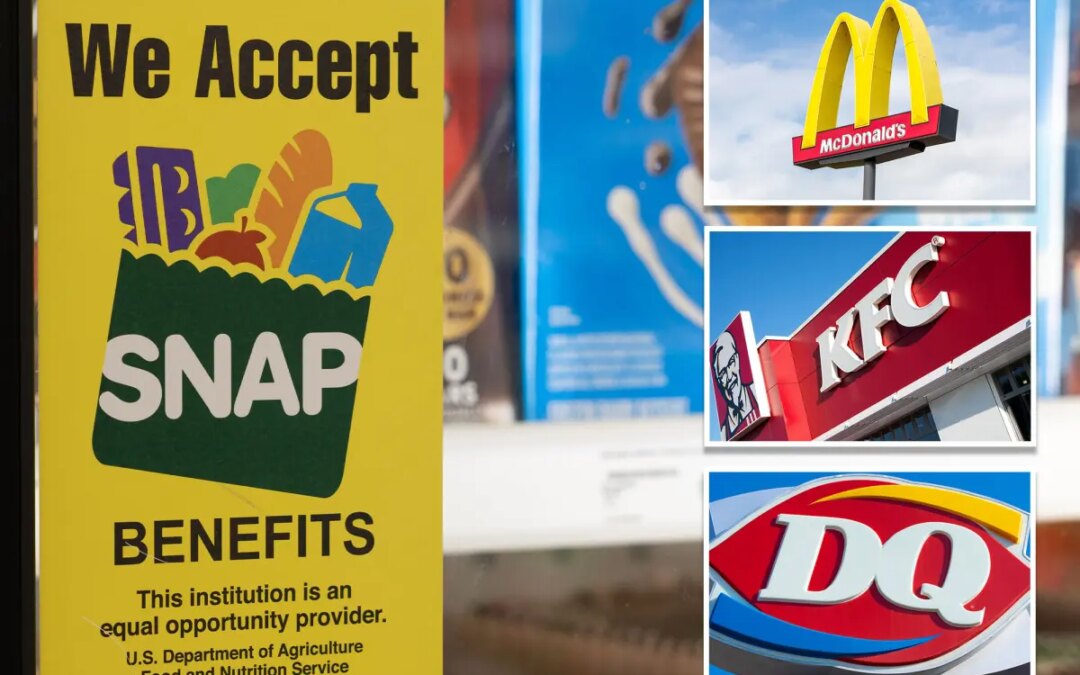
Starting in 2019, California turbocharged the program from limited county availability to statewide access. The state now boasts over 5,800 restaurants enrolled in RMP. Subway, McDonald’s, Burger King, Wendy’s, KFC, and Dairy Queen all have their hands in the taxpayer cookie jar.
Other states followed California’s lead, reviving programs they had previously abandoned.
Republicans Demand Accountability
Senator Joni Ernst of Iowa is spearheading a congressional effort to restore sanity to this runaway program. Along with eight fellow lawmakers, Ernst has formally challenged Health and Human Services Secretary Robert F. Kennedy Jr. and Agriculture Secretary Brooke Rollins to impose stricter nutritional standards.
“SNAP is intended to feed hungry families with nutritious food, but loopholes have funneled half-a-billion dollars to burgers and fries,” Ernst declared. “I’m fed up with this fast-food feasting.”
Her pointed reminder cuts to the heart of the matter: “The ‘N’ in SNAP stands for ‘nutrition,’ after all, not nuggets.”
The Letter That Could Change Everything
The congressional letter pulls no punches. “What was originally intended as a narrow accommodation for individuals unable to store or prepare food has grown and is now dominated by large national fast-food and quick-service chains,” the Republican lawmakers wrote.
They’re asking the critical question: Does subsidizing Big Macs and Whoppers align with the Make America Healthy Again initiative’s goal of combating diet-related chronic disease?
The answer is obvious.
Nine States, One Problem
Currently, nine states participate in SNAP’s restaurant program: California, New York, Arizona, Michigan, Rhode Island, Massachusetts, Illinois, Virginia, and Maryland.
Each represents a jurisdiction where government bureaucrats decided that taxpayer dollars should flow to corporate franchises rather than support home-cooked, nutritious meals for struggling families.
Follow the Money, Question the Wisdom
Representatives Ben Cline of Virginia, Beth Van Dune of Texas, Randy Fine of Florida, Brandon Gill of Texas, Daniel Webster of Florida, Michael Cloud of Texas, and Mike Kennedy of Utah joined Ernst in demanding answers.
Their coalition represents a growing Republican recognition that government programs require constant scrutiny to prevent mission creep and corporate exploitation.
USDA’s Tepid Response
The Department of Agriculture offered only bland reassurances, stating it is “firmly committed to conducting rigorous integrity reviews across all USDA programs that serve our Nation’s most vulnerable individuals.”
That’s bureaucrat-speak for “we’ll look into it”—the same deflection Americans have heard countless times before while problems persist and spending spirals.
The Real Victims
Lost in the half-billion-dollar shuffle are the Americans SNAP was designed to serve. Low-income families struggling with grocery bills don’t need government-subsidized Quarter Pounders. They need resources to purchase fresh vegetables, lean proteins, whole grains, and other nutritious staples.
They need programs that empower self-sufficiency, not corporate welfare disguised as compassion.
The Path Forward
Ernst and her colleagues are demanding that HHS and USDA assess whether tighter rules requiring healthier restaurant options should be implemented. But the real question is more fundamental: Should taxpayers be subsidizing restaurant meals at all, especially when those meals come from multinational corporations?
The Restaurant Meals Program may have begun with good intentions in 1977, but five decades later, it has become another example of government overreach benefiting corporate interests at taxpayer expense.
A Reckoning Long Overdue
With Republican leadership finally shining light on this half-billion-dollar giveaway, substantive reform may finally be possible. The Trump administration’s health-focused agenda provides the perfect opportunity to realign SNAP’s restaurant component with actual nutritional objectives.
American taxpayers deserve better than a system that enriches fast-food corporations while doing nothing to improve the health outcomes of vulnerable populations.
The numbers don’t lie. The mission has been corrupted. And it’s time to put nutrition back into the Supplemental Nutrition Assistance Program—before the next half-billion dollars disappears into corporate coffers.