Trump Administration Dubs Iran Strikes “Operation Bitch Slap” as Military Campaign Intensifies
The United States stands ready to pummel Iran for days or potentially weeks if the Islamic Republic continues its reckless aggression in the Strait of Hormuz—and internal administration sources have given the renewed assault a name that perfectly captures its intent: “Operation Bitch Slap.”
This is Donald Trump unfiltered and unleashed.
The commander-in-chief has made crystal clear that Tehran’s “sick” regime will no longer operate with impunity. After months of failed diplomacy and broken promises, the president has shifted to overwhelming force—and he’s not apologizing for it.
No More Mr. Nice Guy
The colloquial operational name being used by senior Trump officials in emails and high-level conversations represents a dramatic departure from the president’s earlier characterization of strikes as a “love tap” back in May. This time, there’s nothing gentle about America’s response.
“He still wants this thing to be over. But if Iran is shooting at ships, he’s not just gonna sit there and do nothing,” a source close to the White House confirmed. That’s leadership—plain and simple.
The framing is deliberate: painful, swift, and decisively disproportionate. For every Iranian provocation, America will respond twenty-fold. That’s not warmongering—that’s deterrence through strength.
Trump’s Gut Versus the Establishment Playbook
A former White House official revealed what conservatives have long suspected: “Trump is not coordinating with anyone… he’s going with his gut.”
And thank goodness for that.
This president doesn’t need permission from cautious bureaucrats or international bodies that have coddled Tehran for decades. He’s making decisions in real-time based on American interests, not the preferred timeline of multilateral talking shops.
Senior officials were reportedly surprised by Trump’s fiery rhetoric calling Iranian leaders “scum,” “liars,” “loco,” and “sick”—but they’re not complaining. They agree with his hardline approach because it’s exactly what the situation demands.
“This is all Trump, exactly as he likes it,” the former official noted. “Almost impossible to tell what his next move is until he makes the decision himself.”
That’s not chaos—that’s keeping adversaries off-balance.
The Escalation Tehran Chose
Let’s be absolutely clear about how we got here: Iran attacked three commercial vessels using a U.S.-preferred shipping route along the Omani coast. This wasn’t an accident or miscalculation—it was deliberate provocation.
The Islamic Republic chose escalation after a three-month cease-fire and memorandum of understanding that Trump extended in good faith. Tehran responded by targeting civilian shipping in one of the world’s most critical waterways.
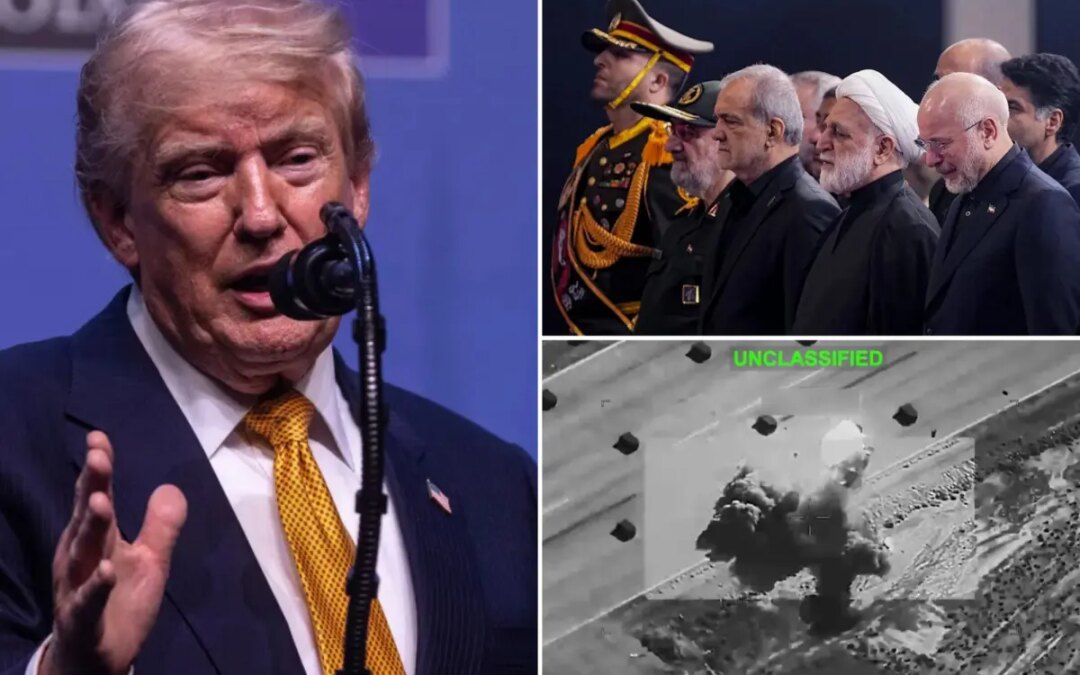
The president’s response has been appropriately devastating. The U.S. military has expanded targets to include critical infrastructure, including a strategic rail bridge near the Turkmenistan border—severing a key transportation corridor connecting Iran to China and Russia.
That’s how you impose costs that matter.
Options on the Table
Trump has given himself maximum flexibility by outlining a full spectrum of responses. If Iran wants to talk, his negotiating team—including Vice President JD Vance, special envoy Steve Witkoff, and first son-in-law Jared Kushner—stands ready.
But if Tehran chooses continued aggression, the president has promised infrastructure attacks, a renewed blockade, and even the seizure of Kharg Island, Iran’s primary oil export terminal.
“We’ve already won militarily. They have very little left,” Trump told reporters aboard Air Force One returning from the NATO summit in Turkey. “They want to make a deal so badly. They called a little while ago. They want to make a deal so badly. I just don’t know if they’re worthy.”
That’s the right question. Iran has proven itself an unreliable negotiating partner time and again.
The Duration Question
How long will this campaign last? That depends entirely on Tehran’s choices.
Trump acknowledged he doesn’t know if this will become full-scale war, but added confidently: “We’d win it very quickly.”
No American should doubt that assessment. The United States military is the most powerful fighting force in human history, and Iran’s capabilities have been systematically degraded through months of targeted strikes.
The ball is in Iran’s court. They can accept defeat and negotiate seriously, or they can continue taking punches that grow exponentially harder with each round.
Iran’s Defiant Delusion
Despite the overwhelming military disadvantage, Iranian officials continue their theatrical defiance. Mourners at former Supreme Leader Ali Khamenei’s funeral carried giant banners calling for Trump’s assassination—a despicable display that only reinforces why this regime cannot be trusted.
Iranian Foreign Minister Abbas Araghchi whined about Trump’s “derogatory language,” insisting that “Iranians do not answer vulgarity with vulgarity, but with action.”
That’s rich coming from a regime that regularly chants “Death to America” and “Death to Israel” as official state policy.
Parliament Speaker Mohammad Bagher Ghalibaf blustered on social media: “Let me put it plainly: if you strike, you’ll get hit. Don’t flail around pointlessly, or you’ll sink even deeper.”
Empty threats from a desperate regime watching its military capabilities evaporate in real-time.
Peace Through Strength
Some critics will inevitably complain about the colorful internal nomenclature or Trump’s blunt rhetoric. These pearl-clutchers fundamentally misunderstand what’s required in dealing with authoritarian regimes that only respect strength.
The Obama administration tried politeness and pallets of cash—and got a more aggressive Iran that spread chaos across the Middle East.
Trump tried maximum pressure sanctions, then extended an olive branch with cease-fires and negotiations—only to watch Tehran pocket concessions while planning its next attack.
Now he’s delivering the only message the mullahs truly understand: devastating military consequences for aggression.
This isn’t recklessness—it’s clarity. Iran knows exactly what will happen if it continues attacking international shipping. The president has drawn bright red lines and is enforcing them with overwhelming force.
The Winning Strategy
President Trump has correctly diagnosed Iran’s strategic weakness: they desperately want sanctions relief and normalization, but they cannot resist provocations that undermine any path to a deal.
“They’re sort of crazy, to be honest with you,” Trump said. “They’re a little bit out of control, but they want to make a deal, badly.”
The president is simultaneously keeping military pressure at maximum levels while leaving the door open for serious negotiations. That’s sophisticated statecraft, whatever his critics claim.
If Iran chooses wisely, this “bitch slap” can be the final wake-up call that brings them to the table with realistic expectations. If they choose continued defiance, America has the military capability and political will to continue imposing costs indefinitely.
Trump has made clear he prefers the former but is fully prepared for the latter.
That’s how America should conduct foreign policy—from a position of unquestioned strength, with clear consequences for aggression, and genuine opportunities for those willing to negotiate in good faith.
The choice is Iran’s. Choose wisely, mullahs.